
Once an implant has integrated with the jawbone, the dentist needs to record the exact position and angle of the implant, the surrounding gum and the neighbouring teeth so the laboratory can make the crown. At Hanoi Smile Dental we take implant impressions digitally with an intraoral 3D scanner instead of conventional silicone material.
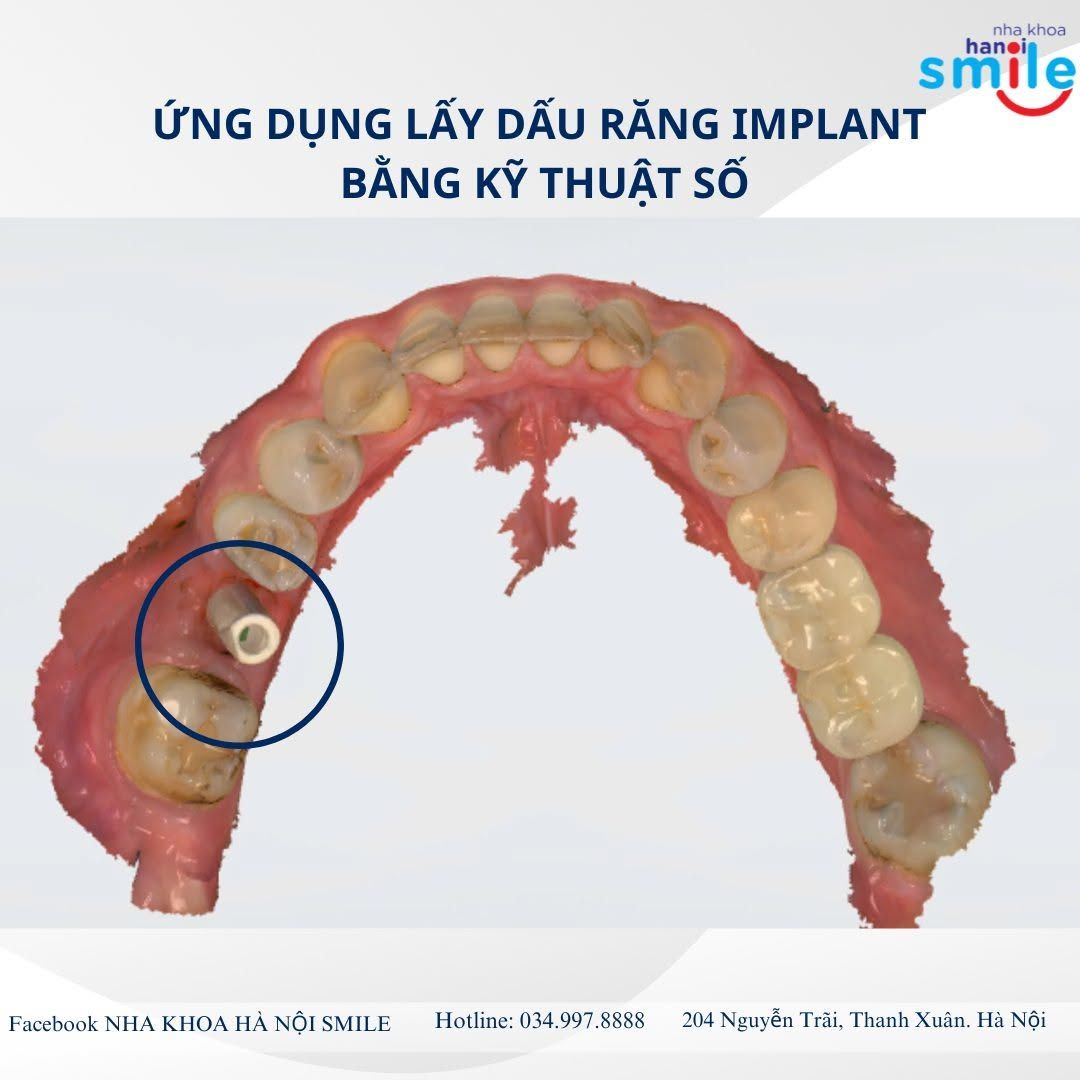
How is a digital impression taken?
- A scan body is attached to the implant so the scanner can register its position and angle.
- A small scanning wand is moved around the mouth to capture the teeth, the gum around the implant and the bite.
- The data form a 3D model on screen and are sent to the laboratory, where the crown is designed and milled with CAD/CAM technology.
Benefits for patients
- High accuracy: for single or few-unit implant restorations, studies report accuracy comparable to conventional impressions.
- Faster and more comfortable: no impression trays, which reduces gagging and discomfort.
- Easy to review: images appear on screen immediately; missing areas can simply be rescanned.
- Long-term records: digital files are stored for future reference.
- Less material waste: no impression material or plaster models.
Good to know
Digital impressions are not always the only option. For some full-arch cases on multiple implants, the dentist may add verification steps or use other impression techniques. The method is chosen after assessing each case.
Note: Treatment indications and outcomes depend on each person's oral condition, general health and home care. This article is for general information only; an in-person examination is needed for individual advice.

